Nevill hits all the right notes in one of the best paced and balanced books of his long and (hah, pun!) storied writing career. While already a fan, this story of kayakers caught up in the tail-end of a much broader horror tale has helped to rekindle a spark. Too bad I’ve read pretty much everything by him, eh?
Summary
(from Nevill’s Official Site) A novel of pagan terror from the author of The Ritual and The Reddening. Disaster strikes quickly and without warning. What should have been a glorious weekend of kayaking and camping, in a secluded beauty spot, is transformed by a scream. The first crisis, initiating a deadly momentum that accelerates as the valley reveals itself to Marcus and his five companions. They’re trespassing on strictly private land. There’s only one way out. An escape route closed until the next high tide fills the estuary. In twelve hours’ time. Recreation becomes survival. Marooned, unable to summon help, harassed by dire and worsening circumstances, the ties that bind the expedition are stretched taut. If they snap, vital cooperation will unravel and the group members’ damning secrets will be revealed. Only the most courageous and committed have any chance against the area’s inhabitants. But is any mind strong enough to endure a confrontation with the most hideous revelation of all? An ancient evil that coils beneath the valley’s sinister folklore.
[Doug’s Note: The limited edition is sold out but the book should be available through other channels, especially ebook. I’m including that link because it’s a good publishing company].
Content Warnings
There are some fairly gory moments and gruesome details. Hints, though of non-specified and imprecise nature, of something like sexual assault (at least non-consensual impregnation). Infidelity. Animal abuse. People are trapped in a cycle of violence due to past mistakes.
Review [Spoiler Free]
Back when I wrote my post about taking a break from reading and watching exclusively horror, I name-checked this novel as a built in exception. Because of course it is. One does not simply walk away from a chance to read a new Adam LG Nevill1 book.
Nevill is one of the best writers in the broad post-Lovecraftian cosmic-tinged horror sub-genre and one of the best writers in the horror genre as a whole.
Monumental absolutely backs up this claim and does it with relish. It is very, very good.
First, let me say that Nevill’s novels are some of the few that can fill me with an absolute sense of dread. Some, like The Reddening, The Vessel, and All the Fiends of Hell (to name a few of the recent ones) can hit me in the chest and it does not matter how bright or how sunny the day might be I can feel my breath catch and bother build. I have had to take breaks from his stories because his words can trap me in a sense of claustrophobia that very few other writers can do.
In that light, picking up a new Nelvill book takes a bit of nerves from me. I know I will like it. I will probably love it. I will consider one of the best books of the year. And I will fear it.
Pulling back from that pure dread just enough is where Monumental shines. It is still there, the dread, and there are still terrible things but the pacing of this book is strikingly effective of making you feel there is a door worth opening. Even knowing what horrors lurk inside, you can feel the book’s plot and characterizations telling you: “Go ahead, a little peak, what’s a few chapters before bed?”
Nevill confirmed it in the author’s note at the end, but while reading through it I felt like this novel was paced almost more like a movie than a book [in a good way]. Visual cues are built upon organically. Dialogue runs a natural course. Elements do not dawdle unless they are made to withstand the strain.
Nevill mentions, in the same author’s note, cutting a possible through-line of exposition but excising it for the pacing and it’s this kind of self-editorial restraint that is proven in the effectiveness of Monumental as whole. This book refuses to fold in upon itself in the way that some books do. Every breather is merely a reloading towards a harsher and sharper struggle.
Characters dwell in the general sphere of known trope, exhibiting the horror-normal of built-in baggage. Infidelity. Jealousy. Petty pissing contests. Jane, the innocent one. Mary, the crone — though arguably Julian is more a crone than Mary. Marcus, the jock. Nigel and Sophie are the couple on the cusp of falling apart.
The characters brush against the point of being irredeemable, an aspect of horror literature that irks me: the moral failings of victims accelerating our emotional attachment to their soon demise. Nevill, for his part, never rests upon this long enough for the characters to fall over the bring unmourned. There are few characters for which you will unequivocally root but you also understand their failings well enough to spend the novel’s length with them [at least the part of the length which they survive].
To a degree, you can even come dangerously close to accepting the trite arguments of the villains of the piece though only close and never quite fully.2
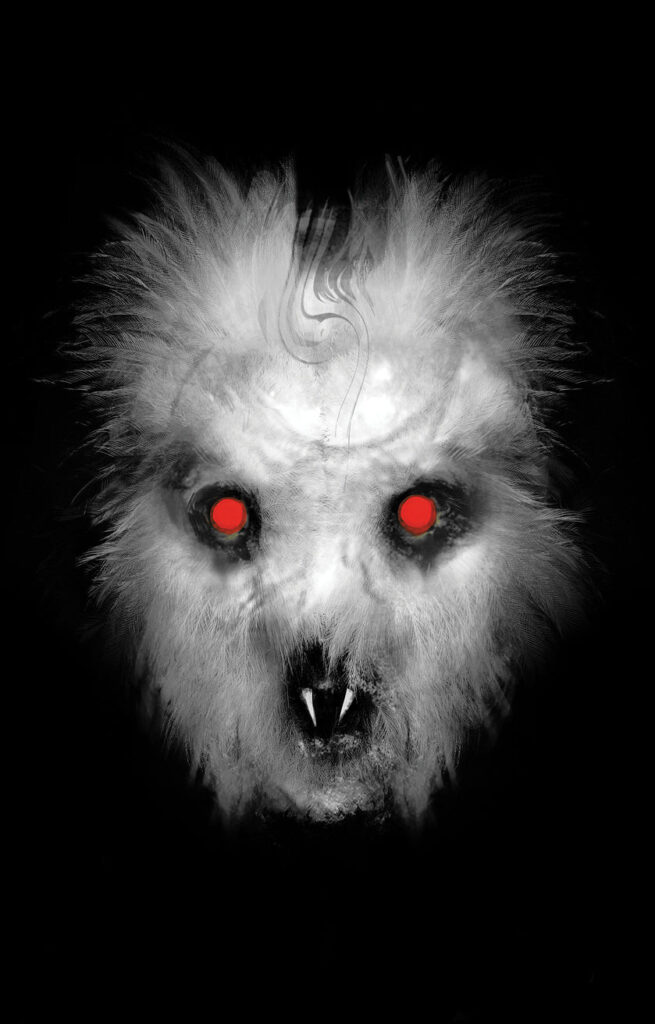
The monstrous is not too far fetched from the types of things we have seen in other books, especially other Nevill books, but they are effective. Quite so. A touch of the chimeric. A blending of known entities in a way that does not quite align. Glimpses of an other world that shines as a highlight of the prose.
My only real struggle was getting a grasp of the valley’s landscape. This is no fault of the book, I simply do not have a full visual dictionary of the sorts of places and environs that British kayakers might visit. I know some, but not a lot. My immersion into several moments was spoiled a bit by this, trying to find a mental place to see what the characters might be seeing. I tripped up on a few passages, thinking I understood only to have a following passage describe a detail that made no sense in my reckoning. I resorted to looking up a few photos online and then blending that with the sort of waterways I boated upon back in my Southern US youth. A different water. A different density of trees. It worked well enough.3
The mixture of pacing, characters that are both broad-stroke and subtly themselves, otherworldly design, and a delightful dip of pure despair all help to make Monumental a favorite horror novel since, well, probably since All The Fiends of Hell (though that one hits a bit different and still haunts me despite being read months ago). Monumental is a thoroughly solid work and great spot to kick off for new readers to the author [ignoring, perhaps, a few references to other recent tales].
Well done, Mr. Nevill, I look forward to the next one. Which is to say, I fear its eventual arrival.
- Even if I have misspelled his name as Nelville and Nelvill in more than one review, despite my best efforts. ↩︎
- The primary human villain is another trope type, one I will not spoil because it might rob you of coming to your own understanding of their motivations. ↩︎
- A similar thing happened years ago when reading through P.G. Wodehouse and barely understanding cricket and being completely lost in his use of slang to describe a particular flavor of the sport. I made do, but I likely made do off a different cliff than he would have jumped. ↩︎