
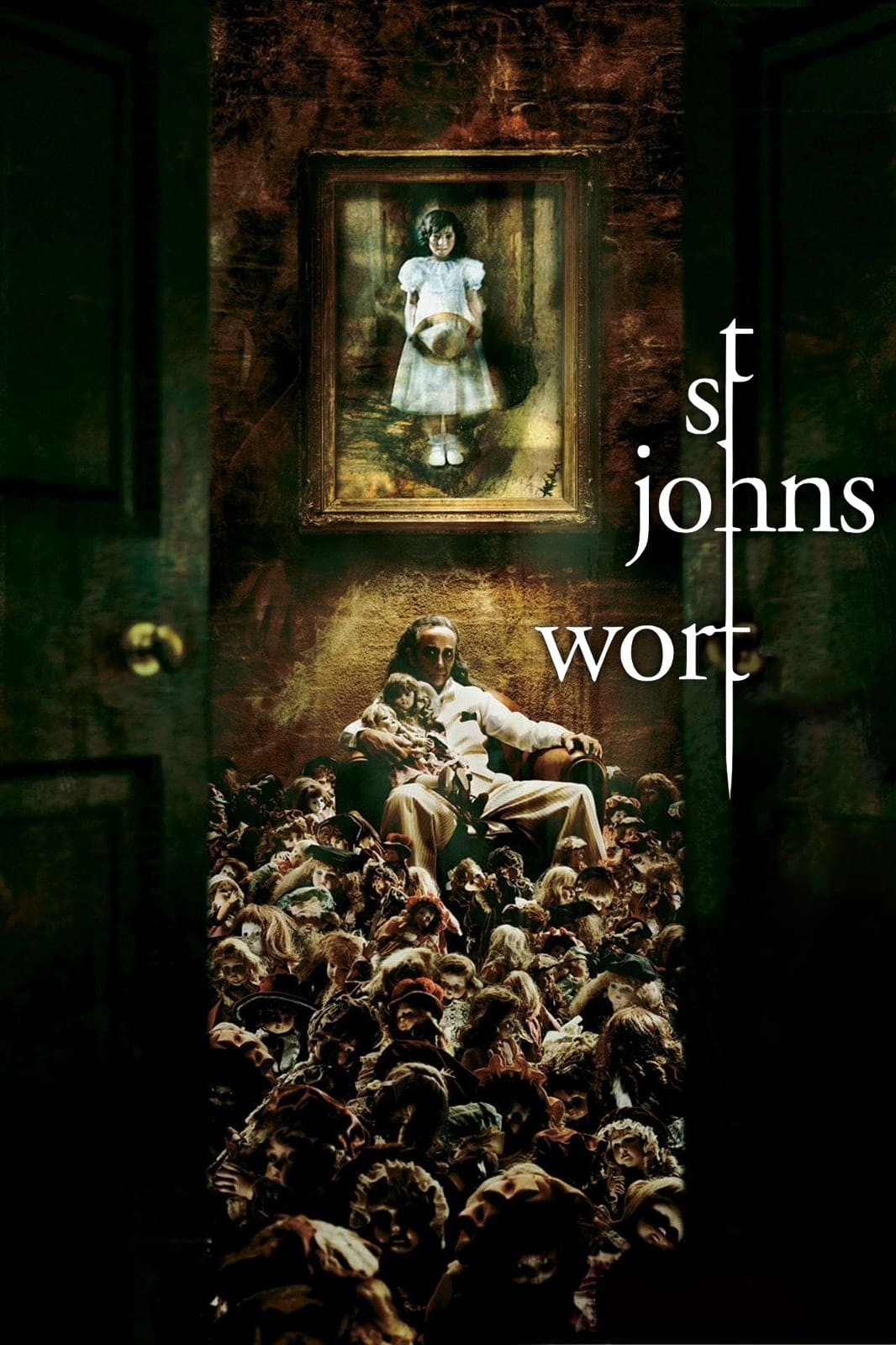
This movie about a young couple in a spooky mansion is a video-game adaptation that deeply embraces its source material, making some bold choices. Some work. Some don’t. Its unique style helps to stand up compared to others, though.
SUMMARY
Content Warnings: 0I3Ed eTprz, 0I3Ed Upsdzs, ymsVzd 8z5dzs 9z-err3L5oz5g. Jmoz mt gIz OTprz o3LIg Tz ORRE3zd gm Tz rzBpOE, Tpg v Oo p5rpsz.
Kohei and Nami work on video games together (at least did, though a there has been a split in the relationship). Nami has inherited a mansion from her reclusive artist father and has asked Kohei to accompany her. He plans to use footage from the mansion to act as his company’s next videogame.
Early on, the vibe of the mansion is strange and off. Paintings are just out of focus. Decay and stark color contrasts are frequent. Then they start realizing the types of secrets the mansion might be hiding.
Because Nami wasn’t an only child, and what happened to her sibling is part of a long and likely terrible mystery.
REVIEW for St. John’s Wort
I continue my trip through J-Horror Rising and my enjoyment level continues to be much higher than your average Letterboxd reviewer, apparently. This does not surprise me. For reasons.
FIRST, before I continue, there is an aspect about this movie that must 100% be embraced before any sense can be had from it. This is a movie which is an adaptation of an actual, in-real-life video game from the SNES era: Otogiriso (St. John’s Wort). This is also a horror movie about exploring a fairly typical spooky mansion which is being explored to be turned into a video game. Then, it is something like its own adaptation of the game being developed from the contents of the in-movie-reality. All three. At the same time. With a couple of shots which are the game designers looking back at the game/movie they have created (we are up to four levels, now, though the fourth is relatively minor).
The visual tricks. The storyline pacing. The characterizations. Embrace that you are watching an adaptation + OG story + adaptation (+ commentary).1
On top of this, it also embraces an extended sequence of found footage prior to the 2005-2007-era boom.
SECOND, I am not saying you have to enjoy any of the above. It is very much a movie that is doing movie tricks which, in this case, are also videogame tricks. It’s meta-cinema. Hell, let’s call it:
St. John’s Wort is a post-modernist videogame adaptation. Neener.
An early dialogue with a caretaker cuts to a videogame dialogue screen. Several shots are old-school CG (at least heavily manipulated photo footage) with the actors moving across it. The logic of finding a key to find some keys to find a missing door to find a secret room to find videos that explain the truth are paced out very much like a 2001 horror puzzle game.2 Even the nonsense plot-twists stepping on each others toes is right in line with games of the era.
As an example of a deeply faithful-to-videogames videogame-adaptation — ironically, it takes some liberties with the story of the game it is adapting — it is a love letter of a movie which is also deeply entwined with its own era. In that light, this movie is absolutely tops. It is bold. Very bold. This is what a movie would look like if it was made as part of a double-dog-dare.

You can’t triple stamp a double stamp and I love it for that.
For the movie itself, I am around 70% down for it. A few of the twists work pretty well. The artifice works pretty well. Then we get to the [warning: spoiler that contains some troubling topics] Vl3AMI h4APA I4A 8V8 hVl iX8LV33XLU aHZl IH 8PAll I4AG d3 Vl YVGX (XLMSd8XLU…YVHGX?). And I don’t know. It’s just sort of spoken far too briefly into being for being such a heady topic. Look, I don’t want to dwell on such things but you can’t say things like that and just move on to the next scene.
I am going to deep dive to fully explain some thoughts ideas, so I’ll wrap the review up here.
Final thought: I love how unique the movie is. I don’t think it 100% succeeds in the “traditional movie” sense, but it does its own thing and there were lots of movies about people in spooky locales trying to unravel plots. We forgot most of those.
This one at least did something. I think pretty well.
DEEP DIVE for St. John’s Wort
There will be spoilers….
…this is your final warning.
I think the most pertinent question by the end is where did we move from “movie which is an adaptation of a game” to “movie which is an adaptation of a game based off the movie which is…” stage. It is clear at the end that we are now seeing the final product in the context of a product. It is also relatively clear we saw a glimpse of this at the start which is foreshadowing this aspect of the twist.
[NOTE: I’m going to call the events really experienced by Nami and Kohei as RNK and events definitely part of the game as STJW.]
The discussion with the caretaker is definitely STJW as presented visually. The audio portion might be RNK.
The spooky mansion with the handheld camera and the early art? Let’s put that in RNK. The scenes walking up to the house which the heavy color manipulation and digital flower fields and such: STJW.
I’m going to say the security cameras are all STJW.
In fact, I take the “real” events being that Nami and Kohei got to the mansion. The mansion was owned by her family. He was a reclusive painter that was mostly overlooked in Japan (maybe, it might make more sense that her dad just had some weird paintings). She did have a sister and that sister did go missing. The found footage is largely RNK real. Around the time that section ends we start getting the more out-of-pocket moments.
BEFORE they find the body but also RIGHT AFTER they are trying to flee the body — bear with me — is all in reality. The body itself is not. The road being washed out…I don’t know.
More or less everything after that is being shown from the point of view of the videogame based on the events of the movie. RNK gives way completely the STJW. The shady caretaker. The owl flying towards the car. The falling tree. Security cameras. The stuff that happened with the children.
This is all the game. At this point, the background characters of Shinichi and Toko are part of their game being designed as people who help the player along. Note that they suddenly are finding exactly the right footage to drive the plot forward and suddenly able to map out extra details.
Perfect videogame logic. Not necessarily terrible movie logic, but much more game.
This is why the caretaker doesn’t quite make sense. There was an actual caretaker but then it got morphed into a maybe-just-Naomi-in-boy-face entity inside the game. Why the voice doesn’t have to match.
This is why we do not dwell on the extent of the child abuse or why the missing sister plotline makes no sense in the context of a “there was a brother and a sister at the same time” plotline. The movie is the game trying to find out what works.
Even as dumb as I know that sounds, keep in mind the movie itself rewrites a portion of its ending inside the movie reality to make it better. It self-edits. Then tosses in a weird out of movie-character twist.
Are we seeing another layer? I mean, probably. One that was thankfully not dwelled upon because it would have been too much. Just another fourth wall broken in a movie full of fourth walls.
- I stress this because a surprising number of reviews seem confused about why the color palette is heavily inspired by old Japanese horror games. Or why the ending does what it does. Or why the movie is set up like a game. Or why a few parts with an in-movie-reality floorplan are completed so quickly. You can make a drinking of game of reading reviews which bring up the color palette. Double shot if the reviewer seems to think it is a glitch/accident that ludicrously got through to final home media editions. ↩︎
- After this, I’m off to deep-dive the history of escape rooms. ↩︎